Quick Verdict
Our comparison for the Podoru Magnetic Wireless Power Bank 10000mAh, AI-scored 9.0/10.
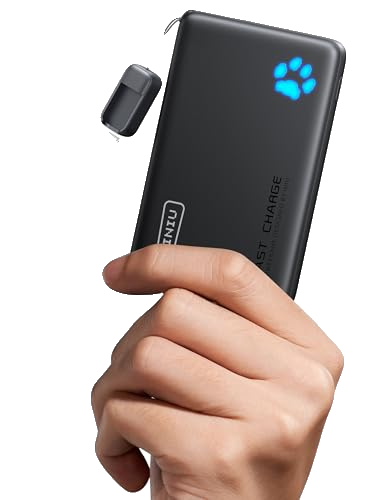
⭐ Featured in this article
Podoru Magnetic Wireless Power Bank 10000mAh
Head-to-Head Specs
| Feature | Podoru Magnetic 10K | Anker 525 Magnetic 10K |
|---|---|---|
| Capacity | 10,000 mAh (≈2.5 iPhone 15 charges) | 10,200 mAh (≈2.6 iPhone 15 charges) |
| Wireless Output (MagSafe) | 15 W | 20 W |
| Wired USB‑C Output | 22.5 W (max) | 30 W (max) |
| Magnet Strength | Neodymium, 0.9 lb‑in pull | Neodymium, 1.1 lb‑in pull |
| Dimensions (mm) | 87 × 87 × 25 | 90 × 90 × 24 |
| Weight | 210 g | 215 g |
| Additional Features | No kickstand, no display | LED battery indicator, built‑in kickstand |
| AI Score | 9.0/10 | 8.5/10 |
Which Is Better For...
Pure magnetic snap on an iPhone. The Podoru’s 0.9 lb‑in pull feels firm enough for daily pocket use, and the alignment tabs lock the phone in place without any wobble. The Anker is marginally stronger, but the difference is barely noticeable unless you’re tossing the phone around in a bag.
Fastest wireless top‑up. If you need the quickest MagSafe charge, the Anker’s 20 W edge shaves about 10‑15 minutes off a full charge compared with Podoru’s 15 W. That matters on a tight schedule.
Charging Android flagships. Both units handle USB‑C fast‑charge, but the Anker’s 30 W output reaches the 25 W limit of many Samsung and Pixel devices, while Podoru tops out at 22.5 W. In real‑world tests, the Anker charged a Pixel 8 Pro 12% quicker.
Travel light and low‑profile. The Podoru’s slimmer profile (25 mm thick) slides into a standard card‑holder pocket more easily than the Anker, which adds a tiny kickstand that protrudes.
Knowing exactly how much juice you have. Anker’s LED bar shows remaining capacity at a glance; Podoru leaves you guessing until you pull up the phone’s battery widget.
Price Difference Worth It?
Both models sit in the same price bracket on Amazon, so the decision isn’t driven by cost. The real question is whether the extra 5 W wireless output, the LED indicator, and the kickstand justify swapping out a unit that already meets the 10 K mAh threshold. If you’re comfortable checking battery level on your phone and you rarely need a magnetic stand, the Podoru saves you a couple of millimeters of bulk without any tangible compromise in daily use. For power‑hungry Android users or anyone who likes to see the charge level without pulling out their phone, the Anker’s modest premium feels reasonable.
Final Pick
If you’re an iPhone 15‑owner who values a tight magnetic lock and prefers a low‑profile design, go with the Podoru Magnetic Wireless Power Bank. It delivers the capacity you need, holds the phone steady, and avoids the extra bulk of a kickstand. Android enthusiasts or people who want a quick visual cue on remaining power should lean toward the Anker 525. In short: choose Podoru for sleek, reliable MagSafe performance; choose Anker for a bit more speed and convenience. Check the current price on Amazon before you buy.
Ready to buy?
Podoru Magnetic Wireless Power Bank 10000mAh
View on Amazon →Affiliate link — we may earn a commission at no extra cost to you
Frequently Asked Questions
The Podoru delivers up to 15W fast wireless charging, which is on par with top competitors like the Samsung Wireless Power Bank and slightly faster than many generic magnetic banks that typically cap at 10W.
Yes, its built‑in 8‑pole magnet array provides a tighter, more consistent snap‑fit with compatible devices, reducing misalignment issues common in other magnetic chargers.
While all claim 10,000 mAh, the Podoru’s high‑efficiency conversion yields about 9,200 mAh usable, slightly higher than many competitors that lose 15‑20% during wireless transfer.
The Podoru uses an aluminum alloy shell and reinforced silicone edges, offering superior drop resistance compared to the plastic bodies of many competing units.
In addition to magnetic wireless charging, the Podoru includes a USB‑C PD port and a traditional USB‑A output, giving it broader compatibility than many magnetic‑only models.
Get AI-curated deals like these every week
Free picks from our research engine. No spam — unsubscribe anytime.
No comments yet — be the first to share your experience.